

One of the most-watched metrics in precious metals — what it measures, how to read it today, and the one mistake most investors make when using it.
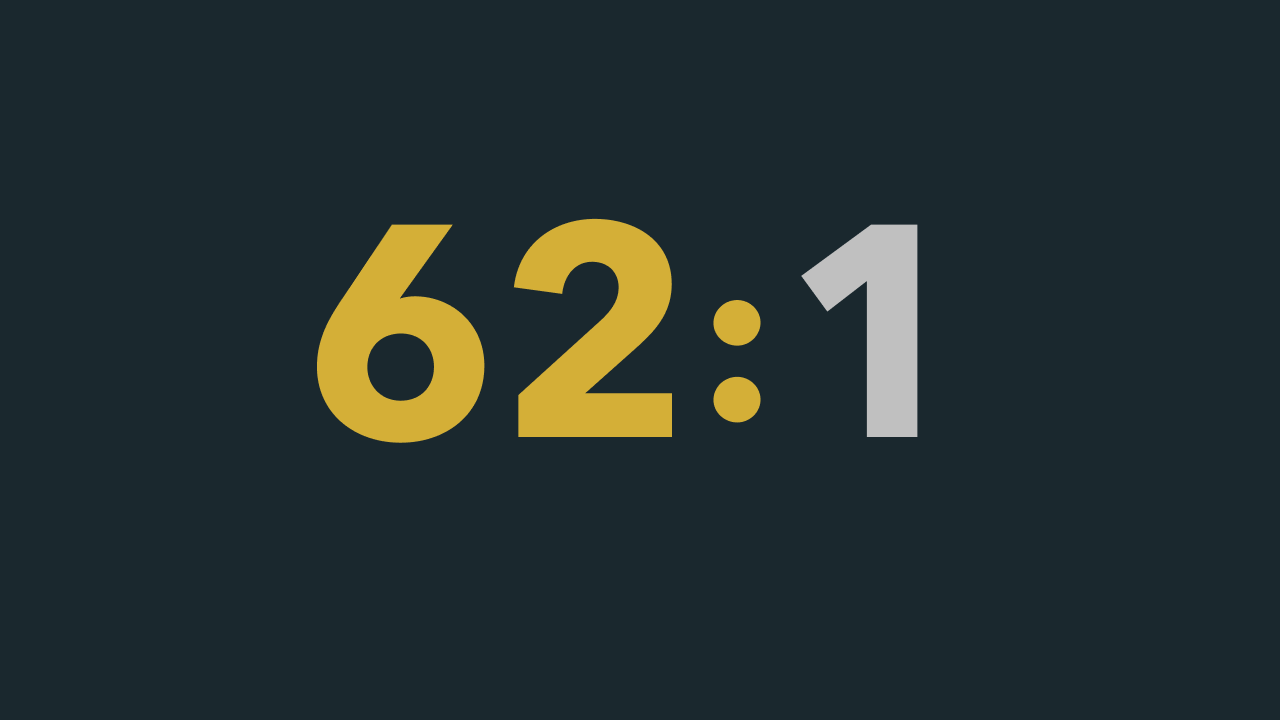
Gold-to-silver ratio — April 23, 2026
A simple number with a complex meaning
The gold-to-silver ratio is the number of ounces of silver needed to purchase one ounce of gold at current spot prices. With gold at ~$4,700/oz and silver at ~$76/oz, the ratio today is approximately 62:1. The modern long-term average since the end of the gold standard sits around 70:1.
Gold/silver ratio calculator
What does the ratio say right now?
Key ratio moments — click to explore
Gold vs. silver — indexed performance (2025–2026)
Silver’s higher beta amplifies gold moves in both directions. Hover for details.
Illustrative indexed performance. Base = 100 at Jan 2025. Source: TradingEconomics, Sprott.
An allocation signal — not a trading trigger
The most common mistake: treating the ratio as a precise timing signal. “Ratio above 70 → buy silver now.” This oversimplifies a metric that has historically taken years to mean-revert and has occasionally remained at extremes far longer than most investors can sustain a position.
The more useful application is as an allocation signal over a multi-year horizon. When historically elevated (above 80–90), the ratio has tended to indicate silver is cheap relative to gold. At 62:1 today, the ratio is below the 70:1 long-term average but not at an extreme — silver has some room to outperform if the industrial demand story reasserts itself as monetary headwinds ease, but this is not the screaming signal it was at 80–90:1.
The ratio is a useful lens for understanding relative value between gold and silver. Used correctly, it is an allocation guide over a multi-year horizon — not a trading trigger.
What happened after the 2020 extreme — and what it tells us about using the ratio
The gold-to-silver ratio hit approximately 120:1 in March 2020, during the acute phase of the COVID-19 liquidity crisis. At that level, it took 120 ounces of silver to buy one ounce of gold — an extreme that had not been seen in modern market history. For investors using the ratio as an allocation signal, this was a clear reading: silver was historically cheap relative to gold.
What followed over the subsequent 18 months was a textbook mean-reversion: silver outperformed gold dramatically, with silver rising from approximately $12/oz to above $28/oz by August 2020, and the ratio compressing from 120:1 back toward 65–70:1 within a year. Investors who used the extreme ratio reading as an allocation signal — gradually adding silver exposure when the ratio was at unprecedented levels — were rewarded with substantial outperformance relative to those who held gold alone.
This case study illustrates both the power and the limitation of the ratio as a tool. The power: at truly extreme readings, it has historically provided a reliable signal of relative value that eventually resolves. The limitation: “eventually” can take 12–24 months, and the path from 120:1 to 65:1 is not linear — silver remained volatile throughout, and investors who used leverage or had short time horizons may not have captured the full mean-reversion. The ratio works as a multi-year allocation tool. It does not work as a monthly trading signal.
The current situation at 62:1 is, by this historical framework, much less extreme. The ratio is below the long-term average but nowhere near the kind of historic dislocation seen in 2020 or even in some periods of the 2015–2018 range when it sat above 80:1. The implication: silver may have some relative value advantage versus gold from a pure ratio perspective, but this is not the screaming signal that 2020 was.
Using the ratio practically — without overcomplicating it
For investors who hold both gold and silver, the ratio can serve as a useful rebalancing guide without requiring any prediction about where it will go or when it will mean-revert. The basic framework is simple: if your target allocation is, say, 60% gold and 40% silver by value, a widening ratio (silver underperforming) will naturally shift your portfolio toward gold as silver’s dollar value falls relative to gold’s. Periodically rebalancing back to target — by adding silver when the ratio is wide and adding gold when it is tight — is a disciplined, evidence-based approach that does not require any forecast.
The key is calibrating the rebalancing threshold appropriately. Rebalancing on every small move is costly and noisy. Rebalancing when the ratio moves by 10–15 points from your target assumption — say, above 80:1 or below 50:1 — captures the extremes without generating excessive trading activity in the middle of the distribution.
For investors not yet holding silver, the current 62:1 ratio, combined with the structural industrial demand case, provides a reasonable argument for beginning to build a position — not because the ratio is screaming undervaluation, but because the combination of below-average relative value and a growing structural demand floor suggests the medium-term risk/reward is constructive. Accumulating gradually over several months, rather than making a single lump-sum decision based on any single data point, is the approach most consistent with using the ratio as an allocation tool rather than a trading trigger.
Understanding silver’s higher volatility before using the ratio
One reason the gold-to-silver ratio has historically been such a useful indicator is that silver consistently exhibits higher price volatility than gold — often dramatically so. In the 2025–2026 cycle, silver rose from approximately $24/oz in early 2025 to an all-time high near $121 in January 2026 — a gain of over 400% — before pulling back 37% to $76 today. Gold, over the same period, roughly tripled before giving back approximately 10% from its peak. Silver’s move was larger, faster, and more violently mean-reverting.
This is not random volatility. It reflects silver’s structural position as a metal with two distinct demand bases — industrial and monetary — that can amplify or counteract each other. When both the industrial demand story and the monetary demand story are aligned — when real yields are falling while solar deployment is accelerating — silver can outperform gold dramatically. The 49:1 ratio at January 2026’s peak reflected a moment when both components were running in the same direction. When they diverge — as now, when the industrial story is strong but the monetary component faces rate headwinds — silver underperforms and the ratio widens.
This dynamic has a practical implication for how to use the ratio. Because silver’s higher beta means it tends to overshoot in both directions, ratio extremes — both compression and widening — have historically been more reliable mean-reversion signals than modest deviations from average. A ratio of 49:1 was a meaningful signal that silver was expensive relative to gold. A ratio of 80–90:1 would be a meaningful signal that silver was cheap. At 62:1, the ratio is in a moderate zone where the signal is less clear-cut, and where the path of mean-reversion could run in either direction depending primarily on how the monetary headwinds resolve.
For investors with a long time horizon, the beta effect is a feature rather than a bug — it means that when the structural thesis plays out, silver tends to deliver substantially higher returns than gold from comparable starting points. The 2009–2011 silver bull market saw silver rise from under $9/oz to $49/oz — a 440% gain — while gold rose from approximately $850/oz to $1,900/oz — roughly 125%. The ratio compressed from approximately 80:1 to approximately 30:1 over that period, reflecting silver’s outperformance. Investors who used the elevated ratio in 2009 as an accumulation signal captured most of that premium.
Holding silver for monetary reasons and holding it for industrial reasons are different — and both can be true
One source of confusion in silver investment analysis is conflating the monetary and industrial investment cases. They are distinct theses that happen to be housed in the same metal, and understanding which one is driving the price at any given time is essential for interpreting movements correctly.
The monetary case for silver — the case that a rising gold-to-silver ratio implies — is primarily about silver’s historical role as monetary metal alongside gold, its sensitivity to real yields and dollar strength, and its tendency to outperform gold during periods when monetary easing cycles begin. This case is currently under pressure because rates are elevated, the dollar is firm, and no rate cuts are priced. It is cyclical and will recover when the monetary environment shifts.
The industrial case for silver — driven by solar PV, EVs, and data infrastructure — is independent of the monetary cycle. It does not depend on the Fed. It does not depend on real yields. It depends on the pace of the global energy transition, which is accelerating. This case is currently not being reflected in the price, which is depressed by monetary headwinds. The gap between a structurally sound industrial thesis and a cyclically depressed price is, for long-term investors, precisely where medium-term opportunity typically resides.
- The gold-to-silver ratio measures how many oz of silver buys 1 oz of gold. At 62:1 today it sits below the modern long-term average of ~70:1.
- The ratio compressed to ~49:1 at January’s ATH — historically extreme. It has since widened as silver (−37%) gave back more than gold (−10%).
- At 62:1, the ratio is not at an extreme that historically signals exceptional silver value — below average, but not deeply so.
- Best used as a multi-year allocation signal — not a short-term trading trigger. Mean-reversion has historically taken 2–3 years.
Start building your gold and silver allocation today. GBI Direct offers fully allocated gold and silver storage through Brinks and Loomis vaults — institutional custody, live-market pricing, accounts open in under 10 minutes.
Sources: TradingEconomics (gold and silver spot, April 2026); Bullion.com; Sprott Asset Management, “Why Gold Has Fallen” (March 2026); historical ratio data from LBMA and COMEX records.
Not financial advice. For educational purposes only. Past ratios are not indicative of future performance.